The Week, That Was – July 2018 Week 3

In five minutes or less, keep track of the most important news of the week, curated just for you. We present to you hand – picked news on latest industry perspectives and some general updates. Read on!!

Expedia says packages are better for hotels than room-only

Hotels are achieving higher average daily rates (ADR) from consumers who book packages rather than just rooms, according to data from Expedia Group.

The online travel giant said consumers buying packages paid around 30% more in ADR than those making standalone hotel bookings.

https://www.tnooz.com/article/expedia-says-packages-are-better-for-hotels-than-room-only/

 Indian budget hotel endorses RateTiger Channel Manager for online distribution

Kolkata based IndiSmart Hotel has endorsed RateTiger for simplifying online distribution. The property has been using eRevMax’s cloud-based Channel Manager and Shopper for managing their online sales channels and has improved their business operational efficiency.

https://goo.gl/gyX3Jr

Hotels.com launches hideaway hotels category

Hotels.com has introduced the Hideaway Hotels category in response to a lift in bookings in the last two years, with a 60% spike in guests leaving positive reviews for off-the-grid hotels.

https://goo.gl/N3SCFX

Is hotel luxury dead?

When hotel discount brokers offer “luxury” accommodations at $49 a night, as occurred during the recent Independence Day holiday, does the word “luxury” have any useful meaning?

Read the interesting article: http://exclusive.multibriefs.com/content/is-hotel-luxury-dead/travel-hospitality-event-management#When:13:51:00Z

 How Booking.com is trying to solve travel’s pain points

The CMO of Booking.com explains how the company is trying to ease some of those unhappy surprises. Learn more about it by watching the video.

https://goo.gl/4AoyiF

Google tests location tab for hotel knowledge panels

Google is testing a new location tab and section within the hotel knowledge panels. The location tab contains information that tells you what is around the hotel, including sections such as highlights, top sights and a getting-around section.

https://goo.gl/v4eKcn

Connect with us for your connectivity needs to make the most of online revenue.
https://goo.gl/3gKUJZ

Thanks and have a good day!

Hotel Business Intelligence – The starting point

What is Hotel Business Intelligence (BI)?

Business Intelligence refers to relevant data – past, present and future, from different sources or hotel systems, that helps hotels to analyze and take meaningful business decision.

In todays’ world, business intelligence plays an important role for hoteliers to improve their revenue in a smart way. It helps hoteliers to draw insights and make better decisions. In-depth BI requires proper tools and investment to help drive a hotel’s revenue. BI plays an even bigger role for hotel chains and groups – where the headquarter is managing multiple properties and need to understand occupancy trends, rates and predictions to be able to define forecasts and budgets accordingly. The different system that a hotel uses to draw upon its BI data include –

  • PMS
  • CRS
  • RMS
  • POS
  • Sales and Distribution
  • Market Intelligence
  • Accounting, Budget and Forecasting
  • Market Reports
  • Competitor rate reports
  • Occupancy trends

The main benefits from leveraging business intelligence are:

  • Effective data management and analysis for clarity in decision making
  • Clear directions on daily targets for occupancy and revenue
  • Clarity on guest profile, booking journey, preferences and customer loyalty thereby giving scope to hotels for enhancing guest experience
  • Plan campaigns and promotions for marketing based on guest data
  • BI also helps identify cases of fraud, poor performance in a timely manner
  • Multiple Reports available at the click of a button as required

Advanced BI tools are platform-based giving hotels a consolidated view of their business. It allows for multiple systems to be integrated so that they talk to each other to provide relevant data in various formats for easier consumption.

Invest in a smart BI solution to take your hotel business to the next level. To know more about which solutions to opt for, contact us today on marketing@erevmax.com


The Week, That Was – July 2018 Week 2

In five minutes or less, keep track of the most important news of the week, curated just for you. We present to you hand – picked news on latest industry perspectives and some general updates. Read on!!

eRevMax completes integration with Argentinian Booking Engine

We are glad to introduce our new Argentina based Booking Engine partner –  Div-it. Connect and manage your hotel booking engine via  RateTiger and Connect platforms for seamless channel management.

https://www.erevmax.com/ratetiger-news/ratetiger-news-archive/july2018-erevmax-integration-with-argentinian-booking-engine.html

Google Hotel Ads joins Google Ads

Google Ads has introduced a new campaign type designed to help hotel marketers better manage their advertising. In addition, there will be a new “Hotel Center” in Google Ads to simplify the management of hotel price feeds.

https://www.blog.google/products/ads/hotel-campaigns/

Why Hotels need Channel Manager?

A channel manager helps you to implement yield management techniques effectively i.e. to sell the right room at the right time at the right price on the right channel.

https://erevmax.com/blog/?p=503

 lastminute’s Travel People builds up suite of marketing products

Our partner lastminute.com launched its advertising platform Travel People which allows clients to advertise across lastminute’s five brands, including lastminute.com, Rumbo, bravofly and Volagratis, as well as working with nine external sites run by partners through its Travel Alliance consortium.

Read the interesting story: https://www.tnooz.com/article/lastminutes-travel-people-builds-up-suite-of-marketing-products/

Why hotel brands and franchisers secretly love OTAs

What really matters most to the brands is getting their hotels to produce more revenue. The more revenue the better.. Now OTAs are the ones who are giving immense revenue to hotel industry.

https://insights.ehotelier.com/insights/2018/07/13/why-hotel-brands-and-franchisers-secretly-love-otas/

Day of the independents – why chains are seeing tech-savvy competitors celebrate

As competition among hotels remains heated due to new construction and market saturation, independent hotels continue to thrive and outpace chain hotels.

This is taking place in both growth and their average daily rate (ADR).

https://www.phocuswire.com/Rise-of-independent-hotels

Revenue management adapting to predictive pricing tools

It’s a constant back-and-forth: Hoteliers will always try to get the highest rate possible, and in return, guests will always try to figure out a way to pay the lowest amount possible.

As technology in the travel industry advances, guests are finding an advantage in the evolution of predictive pricing tools, such as those offered by Google Travel or apps like Hopper, which predict future hotel room rates to tell guests whether they should book now or wait until the rate lowers.

http://www.hotelnewsnow.com/Articles/287265/Revenue-management-adapting-to-predictive-pricing-tools

Connect with us for your connectivity needs to make the most of online revenue.
https://goo.gl/3gKUJZ

Thanks and have a good day!


eRevMax completes integration with Argentinian Booking Engine

Interface with Div-it to allow hotels manage their booking engine from RateTiger

eRevMax has completed 2-way integration with Argentina based internet booking engine developer Div-it. Hotels using RateTiger and RTConnect, can leverage this interface to make real-time rate and availability updates and receive bookings generated on their direct channel directly into their property management systems.

Buenos Aires based Div-it is one of the upcoming internet booking engine providers catering to over 200 hotels in Argentina and Uruguay. The Div-it booking engine features rich functionality, content customization with real-time reporting, and is fully manageable from the RateTiger dashboard.

“Our interface with RateTiger will be beneficial for our partner hotels to quickly and efficiently manage room rates, availability and restrictions to their direct channel. In addition, connecting with the eRevMax Hotel Ecosystem will give us the opportunity to explore new supply partners and improve our global inventory supply,” said Nicolás Boccacci, CEO, Div-it.

“Latin America is a growth area for us. We are connected with some of the biggest OTAs and PMS providers in the region.  Being a preferred connectivity partner of Div-it will further improve our portfolio in the region. A greater number of hotels can now leverage the benefits of our Ecosystem while streamlining their distribution efforts,” said Ashis Saha, SVP – Project Management, eRevMax.

eRevMax offers seamless connectivity with over 350 OTAs and 90 technology providers. The company is developing its connectivity solutions to offer sophisticated real-time revenue management functionality to the hospitality industry. This includes solutions for the independent market and scaling up through the Tier One enterprise hotel groups. eRevMax’s Channel Ecosystem facilitates quality certified connectivity and relationship management services to support complex revenue generation strategies.

A Tale of Two Technologies

How the Seamless Merger of Hotel Systems Leads to Better Results

The travel and hospitality business might have started small, with people lending a space in exchange for a certain tribute, but it has now reached a point in history when it is completely reliant on technology. Between a multitude of hotel systems and software that have become absolute necessities in the 21st century, many hoteliers might feel somewhat lost or overwhelmed. So many options, so much to do, so little time.

In a time like this, the integration between technologies is not only welcomed by both hoteliers and travelers, but it is also deeply needed by the industry itself. In an effort to save time and increase efficiency, as well as strive for a wider, global exposure, hospitality technology providers are partnering up and creating intelligent connections like never before.

In 2016, eRevMax and TrustYou, two leading companies in the hospitality field, started a collaboration that, to this day, results in benefits not only for them but for a high number of hotels from all over the world. By merging TrustYou’s guest feedback platform with eRevMax’s hospitality operating platform, hotel managers can oversee and manage various hotel operations like revenue management, online distribution, as well as their hotel’s online reputation among various other segments.

eRevMax’s platform, LiveOS, works around the “Profits in Unity” concept, which means that it gathers dozens of technology providers and partners in one place, for easy access and increased efficiency to “Make Life Simple” for Hotels. From PMSs, RMSs, OTAs, to ORMs like the TrustYou platform, LiveOS has currently more than 50 technology partners integrated.

So why is it so important to merge systems and software and how exactly does it pay off? It’s not a secret anymore that we live in a fast-paced world and that modern hoteliers and consumers are in a constant rush. While having so many technologies to rely on, signing into different platforms multiple times a day can be an unnecessary and time-consuming process.

eRevMax’s vision is to enable hoteliers to have access to a more complex and intuitive tool, in order to manage a multitude of hotel operations from a single sign-on platform. Users can select and use their preferred technologies, even ones that are not owned by eRevMax, therefore enjoying a customizable and personalized experience. The platform provides real-time updates and it also flags any arising issues, to bring immediate attention to them.

In the last two years, TrustYou’s guest feedback platform was used by eRevMax customers, through the LiveOS platform. Hoteliers can keep track of their hotel’s overall score and reputation while getting real-time updates about guest reviews. Receiving valuable insights into the guest journey is for many hoteliers the first step towards adjusting future strategies and services, in an effort to exceed expectations and improve the reputation – which, in the long run, leads to more booking and a higher revenue.

LiveOS users have free access to features integrated into the TrustYou feedback platform. Moreover, when accessing the TrustYou data inside LiveOS, users get an overview of their hotel’s overall score, along with the exact number of verified reviews that determined it.

The incoming reviews are displayed in the TrustYou dashboard and highlighted, in order to create a thorough examination of the best services provided and the ones that need improvement. This way, certain features, such as the location, the breakfast, the pool area, get their own score and guest sentiments. The feedback is also structured by language and by traveler type, such as business travelers, families, couples, etc.

Beyond the analytical part of the feedback platform, LiveOS users can also opt to use the TrustYou Stars Lite feature, which enables the use of a customizable guest survey. Hoteliers can encourage guest feedback by asking for reviews and opinions, through a quick and efficient survey – which TrustYou’s latest study revealed to be the best way of getting positive feedback.

Only one year after LiveOS users started to utilize the TrustYou survey tool, the overall number of collected reviews had almost tripled: from 1878 reviews in 2016 to 6990 in 2017. This comes as a confirmation of the necessity and utility of a guest survey, as a tool to get valuable guest feedback.

This seamless integration between two leading hospitality technologies has proven to be most beneficial for both eRevMax and TrustYou, as well as hoteliers from all over the world, who use and rely on LiveOS and the TrustYou feedback platform. eRevMax has enabled a way for users to make the most out of their software and have every single technology necessary available with one sign-in. Their portfolio provides every technology that impacts the guest journey, as TrustYou’s latest eBook described it.

TrustYou’s leading guest feedback solution gets more exposure through LiveOS and reaches a larger number of hoteliers, interested in managing, overseeing and improving their online reputation.

And hoteliers, well, they get best of both the worlds. By being able to make use of multiple must-have hotel technologies in one place, they not only save valuable time, which can be invested in other areas, but they also improve operations, manage and boost the hotel’s reputation and work towards achieving better results, more popularity, bookings, and revenue.


Why Hotels need Channel Manager?

In today’s tourism sector, OTAs are playing a major role and big OTAs like Expedia and Booking.com have dominated the travel market. So, it is a must for hotels to opt for OTA services. Additionally, it is not possible to get enough bookings from one OTA, so now hotels must connect with multiple OTAs which makes it difficult to manage the inventory manually. Hence comes the role of a Channel Manager.

A channel manager helps you to implement yield management techniques effectively i.e. to sell the right room at the right time at the right price on the right channel.

Channel Manager helps to boost occupancy rate. It pushes room inventory and automatically updates all rates in respective OTAs in real- time.  Even a channel manager gives more opportunities to hoteliers to connect with more OTAs to expand visibility and earn more revenue.  Room rates and availability get updated across all platforms in real-time. Along with Channel Manager, a hotel can connect with more systems like PMS, GDS, RMS, CRS, Rate Shopping and Meta Search sites.

Key Benefits of using a Channel Manager –

  • Manage availability and rates for OTAs from one dashboard
  • Efficiently close availability at the click of a button across all channels
  • Expand online visibility by selling on multiple channels
  • Maximize hotel revenue by smart management of rate
  • Increase occupancy level with clever distribution strategies
  • Eliminate overbooking situations by using pooled inventory feature
  • All updates made in real-time without logging into multiple extranets
  • Bookings from channels delivered directly into PMS
  • Inventory status always up to date in the PMS
  • More time to focus on strategies rather than updating channels
  • No risk of human errors when updating rates or inventory on channels

A Channel manager also helps you to connect to channels that bring more business to your country – thereby putting your hotel in front of international travelers. Considered one of the best hotel channel manager in the market, RateTiger is integrated with more than 350 OTAs and working closely with 9000 hotels globally. It is the connectivity partner of choice for large hotel groups, mid-scale chains as well as independent properties in both luxury and budget segment worldwide providing solutions through its core product brands – RateTiger and LiveOS.

The Week, That Was – July 2018 Week 1

In five minutes or less, keep track of the most important news of the week, curated just for you. We present to you hand – picked news on latest industry perspectives and some general updates. Read on!!

VHP Announces Connectivity Integration with RateTiger
Manage your online sales channels directly from one of APAC’s largest PMS, via RateTiger HotelChannelManager. Experience 2-way seamless hoteldistributionconnectivity for distributing rates and inventory to channels and getting reservations back into the PMS – all managed from the PMS interface.

https://goo.gl/SXFjEd

China’s travel tech companies make steady progress with AI
Use cases of artificial intelligence are being refined as Chinese technology companies become sophisticated with the handling of massive data volumes, crafting advanced algorithms and embrace improvements in computing power and storage. The application of AI is being used in improving the efficiency of traditional travel agents by working out a customized trip itinerary in a matter of seconds, recommending add-ons based on the traveler’s previous bookings or recent trip planning behaviors and curbing payment-related fraud.

https://www.tnooz.com/article/ai-travel-use-cases-china/

Next generation of travel tech leaders
The current crop of leaders of the industry were brought up on the early days of ecommerce. They created and integrated many of the systems and processes that are second nature today to how the online sector works. The next generation of industry leaders are digital natives, as the phrase goes, potentially giving them a different perspective on it all. Check out this video that discusses current issues and tips from the industry elders.

https://www.phocuswire.com/Video-young-leaders-travel-technology

Who are the biggest innovators in hospitality?
Ecole hôtelière de Lausanne put six innovation scenarios to test and asked hospitality industry executives what scenario(s) were more likely to take place in their organization within the next three to five years. Download the full report to know about the test.

http://hotelmarketing.com/index.php/content/article/who_are_the_biggest_innovators_in_hospitality

Economist: Hoteliers should prepare for a downturn
While the outlook shared by many hoteliers has remained relatively upbeat as the hotel industry has enjoyed a prolonged up-cycle, at least one economist warns that the good times probably won’t last much longer.

http://www.hotelnewsnow.com/Articles/287183/Economist-Hoteliers-should-prepare-for-a-downturn

Connect with us for your connectivity needs to make the most of online revenue.
https://goo.gl/3gKUJZ

Thanks and have a good day!

Rio 2016: DOs and DON’Ts list for Brazil Hoteliers – Part I

In exactly 50 days from now, the Olympic Games will begin at the summer playground of Rio de Janeiro. However, unlike the soccer world cup two years ago, the mood seems to be far from upbeat. With the country in political turmoil, economy into severe recession along with global public health emergency due to Zika virus, the time does not look right for Brazil to host the Olympics party.

However, amidst the dark shadow casting over the country, there is something positive for the hospitality industry. The weakened currency has made travelling to Brazil a bargain for international visitors. According to data released by the Ministry of Tourism, spending by international visitors grew by 11.47 % in the first quarter of 2016 compared to the same period last year. Weakened Real has also forced Brazilians to focus more on domestic travel, boosting the country’s hospitality sector.
2016 organizers are expecting expect half a million visitors for the 2016 Olympic Games, which take place from August 5-21. The recent measure by the government to allow visa free entry for tourist from Australia, Canada, USA and Japan between June to September will also help the hoteliers to balance the shoulder periods before and after the games. 
Brazilian Hotel Association reports that occupancy level at five star hotels during the games in almost 98%. This is 200% increase from 2014, however, hotel rates, which saw 5 fold jump during the soccer world cup seems to have increased by 122%. However, it’s also a matter of simple economics of supply and demand: more fans attended the World Cup, and more hotel rooms are available now. The past two decades of economic boom, along with two mega sporting events, namely FIFA World Cup 2014 and Summer Olympics 2016 has resulted in a substantial investment in the lodging industry with more than 15,000 rooms being added to the inventories.
With hotel industry is moving towards dynamic pricing as hoteliers can now access online rate performance and see how they can change their prices more frequently to increase revenue, all thanks to the competitive benchmarking tools available in the marketplace, the question that requires more discussion though is how should a hotel respond to unusual events in town?
The dynamics of hotel pricing has always been a classic case of cat & mouse game – where the hoteliers have to balance the see-saw every minute on several factors. How do you balance the see-saw of high season vs. low season, an exorbitant rate vs. customer loyalty, price optimization vs. revenue optimization, inventories vs. competitive pricing?  Hotel pricing has always been a never ending roulette for an hotelier.
Experience from past events suggest there needs to be more strategy behind these rates to better align them with customer expectations as this will help build better relationships with potential customers. A classic case study how prices can fall dramatically after a major sports event is South Africa, which hosted the last FIFA World Cup in 2010. The country saw its average room rate tumble by 17%, with host cities Cape Town down by 20% and Johannesburg by 13% according to Hotel Price Index by Hotels.com. Even in the case of Brazil, while the Cup generated lot of attention, the tourist inflow remained flat.
Unlike Barcelona  or Salt Lake City, where the legacy effect of a mega event like Olympics have been positive, lack of competitive pricing or infrastructure has not helped Brazil tourism sector to perform up to the expectation. Will the devaluation of currency and improved infrastructure would finally change the scenario? Only time will tell, but here are a few Dos and Dont’s for the Brazilian hotel industry.
DO 1# Use rate date to optimize your pricing strategy:
Brazil Hotel industry has been struggling in recent years with occupancy falling to 56.7% in 2015 according to STR. Hotels in Rio experienced a 26.7% drop in RevPAR in 2015. Making it more challenging is Airbnb, an official partner of the Olympics, which saw a sudden surge of listings in Rio. With 86% Brazilians intent to travel domestic, recession has helped Airbnb to grow manifold. The home-sharing company has over 25000 listings in Rio alone, making it Airbnb’s largest market after Paris, New York and London.

With the online travel industry still growing at over 13%, hotel industry needs to compete and grow their market by reaching out to the online buyers. Historical and current rate data will play a crucial role to identify the most profitable channels and customize strategies according to market dynamics.
By all means, utilize the high demand to raise profitability, but give attention to the shoulder seasons either side of this mega event as they are expected to be leaner periods than in normal times. Analyze current occupancy, bookings and revenue against data to make the rate level decisions to secure additional reservations. Use Rate Shopping reports to see rates, room categories, and restrictions that provide the details.  Review price analytics to develop a strategy for a lean season and identify the correct channels to promote that plan.
DO 2# Create a balanced distribution mix with regional and global sales channels:
With business travel down due to economic turmoil, leisure travel is going to be the saviour for the hotel industry. About 6.3 million foreigners visited Brazil in 2015, more than half of them from South America, with Argentina alone accounting for one third of all visitors.
With 3 out of 3 online bookings being made in OTA, it’s important for hotels to revisit their distribution mix. While wooing the international traveller is perfectly alright, don’t ignore the all-powerful domestic travellers. It’s vital to add a balanced mix of global and regional channels in your distribution portfolio. Adapt a more flexible sales strategy. Each customer is different, and cannot be handled with a uniform approach. That does not mean throwing strategies & positioning out of the window, but customize them according to market dynamics. Plan for each target segment. Hotels who have applied a more dynamic and flexible approach are the ones that are the most successful.
DO 3# Power your hotel systems with right technology:
Hoteliers in Brazil need to understand the need for multiple technologies to handle third party sales due to the limitations available in existing systems. By utilizing technologies for rate calculations, rate shopping, updating rates and inventory, they can react to market dynamics in real-time. Channel managers are required to efficiently and accurately manage the OTAs. This will allow the revenue management team to focus more on strategy.
DO 4# Integrate mobile channel in your marketing strategy:
Brazil leads the mobile revolution in South America, both by its sheer size and penetration. With bookings from mobile accounting from 23% of total online bookings, this is one channel which no hotels can afford to ignore anymore. OTA with their superior technology prowess is quite ahead, but hotels now need to develop a mobile strategy for promotions and outreach.

Evaluate carefully and create a customized campaign for mobile users. Remember, most global OTAs have a mobile application or mobile optimized website. Not having a mobile presence would mean losing traffic to your brand.com site, thereby losing the chance to get more direct bookings at better margins.

Stay tuned for part two of this series which will be posted in next week.
Image Credit: CC

 Alex Moura is the Regional Sales Director Latin America and Portugal at eRevMax. He can be reached at alexm@erevmax.com

Arabian Travel Market 2016 – Top Middle East Travel Trends

This year’s edition of Arabian Travel Market (ATM) was held last month and witnessed a 7% year-on-year increase in visitor numbers with more than 28,000 trade visitors attending the show.


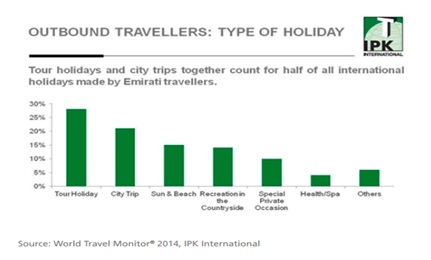
As per a recent report by IPK International, Middle East is the world’s fastest-growing outbound travel market, having witnessed an increase of 9% in outbound trips over the first eight months of 2015. Although Middle East is going through political unrest and economic uncertainty, the region has seen positive growth in the travel sector last year. Close to 12 million travelers visited Dubai in 2015, making it the fifth most popular city in the world for international visits. I have identified some interesting middle-east travel trends- 

High Spending Travellers

Outbound travel from Middle East increases in the summer months to almost 60% to avoid the summer heat, compared to about 40% in the winter season. In 2015, almost 40 million Emiratis crossed the border, and as per research, this number is expected to touch 81 million by 2030. When it comes to travel planning, Middle East travellers prefer long vacations with an average of 14 nights stay. And in terms of spending, travellers from the region are considered high spenders – with the average spending being 200 Euros per person per night.


Rise of “Digital Natives”

One of the youngest regions of the world with over 50% of the population aged between 18- 34, travel in UAE and other Middle East countries are largely influenced by the digital experience. 65% millennials begin their travel planning online while 52% prefer to compare prices in various online platforms before making a decision. High internet penetration and rise of smartphone users have increased online travel sales in the region in last couple of years. As young affluent travellers are migrating to new channels for travel planning, hoteliers too are making an effort to step up their game by being visible on multiple channels including meta-search for improved online bookings.
Personalization

Like every other traveller in the world, Middle East travellers too prefer personalised services and it starts right from the purchase journey. With almost two-third travellers accessing travel related information through their smartphones, it has become imperative for hoteliers to have a mobile optimized website with relevant content. Further with changing customer preferences, hotels need to have a dynamic marketing and pricing strategy to make the most of every available opportunity.

The travel industry in the Middle East region has changed dramatically over the last decade and hoteliers need data-driven analytics to respond more rapidly to changing market conditions, reach out to “new age” travellers and offer personalised products and services.

Ram Mohan Dubey is the Sales Manager MENA at eRevMax. He can be reached at rammohand@erevmax.com.


WTM Latin America: Top Trends to Watch

The fourth edition of WTM Latin America in Sao Paulo concluded last month. The largest travel trade fair in Brazil brought more than 5,900 unique travel trade visitors and over 1,000 buyers from around the world under one roof.  The event is a platform for the world to visit Latin America – the success of which can be gauged with the fact that business deals worth US$363 million were transacted across the three event days.
 
Julian Lindt at WTM Brazil
Like previous year, I was there to meet clients and prospects and interact with peers in the industry. Given Brazil will be hosting the Summer Olympics in Rio this year, we witnessed an increased number of hoteliers at the show looking for solutions and opportunities on how they could maximise from the upcoming events.

Julian Lindt and Alex Moura with a partner at WTM Brazil
According to Brazil’s state-owned tourism agency – Embratur, an estimated 380,000 international tourists are expected to visit the country during the Olympic Games. Brazil welcomed over one million foreign visitors during the FIFA World Cup in 2014 and from then has continued to see an increased number of travellers visiting the country.
With such high demand, hoteliers see the growth prospects in the region and many hotel brands have started new projects to cater to these visitors.  The total number of hotels and condo hotels in Brazil in 2015 was pegged at 10,050 and total available rooms at 500,212. Hotels are looking to increase the room supply before the Summer Olympics to ensure they meet the demand effectively.
With more than two million people visiting the country every year and over one million expected to travel, hoteliers need a strong online distribution strategy to reach out to the global travellers for maximising revenues.
Julian Lindt is the Latam & Caribe Sales Director at eRevMax. He can be reached at julianl@erevmax.com